Riding the Wave: The Psychology of Winning Streaks and Knowing When to Cash Out
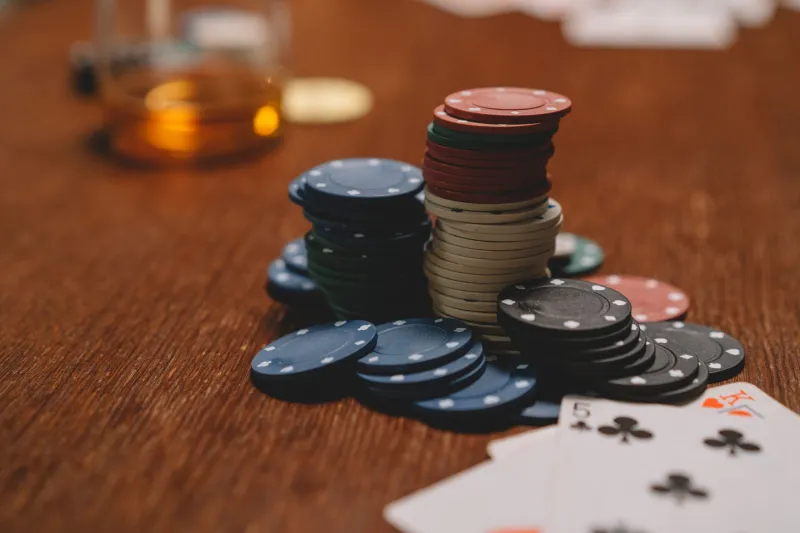
There's a particular kind of electricity that takes over when you're on a run. The chips are stacking up, every decision feels sharp, and somewhere in the back of your mind a quiet voice starts whispering that tonight might just be your night. It's one of the best feelings in casino gaming — and also one of the most deceptive.
For Aussie players who've spent any serious time at the tables or spinning the reels, this experience is instantly recognisable. The streak feels real. It feels earned. And that's precisely where the trouble starts.
The Brain on a Hot Run
Winning streaks don't just feel good — they physically change how your brain processes decisions. When you land a few consecutive wins, your brain releases dopamine, the same chemical associated with reward, pleasure, and motivation. The problem is that dopamine doesn't just make you feel great; it also distorts your perception of risk.
Researchers call this phenomenon the "hot hand fallacy" — the deeply human belief that past success predicts future success in random or near-random systems. In sport, a player who's been sinking shots genuinely might have a hot hand. But in casino games governed by random number generators or fixed probabilities, each spin or hand is mathematically independent of the last.
Your brain doesn't know that, though. It's running on pattern recognition software that evolved over thousands of years, and right now it's convinced you've cracked the code.
The Illusion of Control
One of the sneakier side effects of a winning streak is what psychologists call the "illusion of control" — the sense that your choices, instincts, or strategy are directly causing the wins. You started betting bigger on red because it "felt right," and red came up. You switched to a different pokie after two dead spins, and the new one paid out straight away.
These connections feel meaningful. They're not — but try telling that to your brain mid-streak.
This illusion is particularly strong in games that involve any element of player decision-making, like blackjack or poker. Even in games that are largely luck-based, the act of making choices creates a sense of agency that gets reinforced every time an outcome goes your way.
For Australian players who pride themselves on backing their instincts — and let's be honest, that's a pretty Aussie trait — this can be a real blind spot.
Why Players Give It All Back
Here's the pattern that plays out more often than most players care to admit: you're up a solid amount, the session has been going brilliantly, and then — gradually or all at once — the tide turns. But instead of protecting your gains, you keep playing. Maybe you chase a bit. Maybe you just figure the good run isn't quite done yet.
By the end of the session, you've handed back most or all of what you were up.
This isn't a failure of character — it's a failure of planning. Most players sit down with a loss limit in mind but no clear exit strategy for when they're winning. That asymmetry is costly.
The streaks don't last because they can't. Variance is a mathematical reality, and every hot run eventually regresses toward the expected outcome. The question isn't whether the streak will end — it's whether you'll still be ahead when it does.
Practical Strategies for Locking In Your Wins
So how do you actually protect profits without killing the fun? Here are a few approaches that disciplined players swear by:
Set a win target before you start. Decide in advance what a great session looks like. If you sit down with $200 and your target is $300, walk when you hit it. Simple, but most players skip this step entirely.
Use the "pocket half" rule. When you double your starting stack, pull half of your profit out of play and don't touch it. You're now gambling with house money on top of a guaranteed gain. This approach keeps the session alive without risking your full upswing.
Build in a cooling-off trigger. Agree with yourself that if you lose back a set percentage of your peak balance — say 20% — you'll call it a session. This stops the slow bleed that turns a winning night into a losing one.
Separate your winnings physically or digitally. In a physical casino, move chips to a separate stack. In an online environment, consider withdrawing a portion mid-session if your platform allows it. Making the money feel real and separate from your "playing funds" creates a psychological barrier that's surprisingly effective.
Reading the Room — and Yourself
Beyond the mechanics, there's an emotional awareness piece that separates good players from great ones. Ask yourself honestly: am I playing well right now, or am I just riding variance? Is my decision-making still sharp, or am I getting loose because I feel bulletproof?
A winning streak can actually degrade your play quality. Overconfidence leads to bigger bets than your bankroll strategy calls for, looser calls in poker, and less attention to game selection. The irony is that the moment you feel most invincible can be the moment your discipline is at its weakest.
The best Aussie players we've seen manage this by treating a big win as a signal to tighten up, not loosen up. They get more conservative as the stakes of losing their gains increase, not less.
The Walk Away Isn't Weakness
There's a cultural thing in Australia around not quitting while you're ahead — the idea that leaving the table early is somehow leaving something on the table. But the most experienced players have long since flipped that script.
Walking away with a profit is the goal. It's not a consolation prize — it's the whole point. Every session where you finish ahead is a win, full stop, regardless of whether the streak had a few more spins left in it.
The silent streak is seductive precisely because it's quiet. It doesn't announce its end. It just stops — and if you're not watching for it, you'll realise too late.
Know what a good session looks like before you start. Protect what you earn. And when the run has given you what you came for, have the confidence to collect and go.
That's not just smart gaming — it's the kind of discipline that keeps this whole thing enjoyable for the long haul.